
Why Switching to a Career in Home Care is So Rewarding: Your Path to a Fulfilling Job in Abingdon, Didcot & Wantage
Changing careers is a big and often exciting decision. If you’re thinking about a move into a sector like domiciliary care (supporting people in their own homes), you’re looking at a path that’s not just emotionally enriching but also professionally fulfilling. Whether you’re considering a career switch later in life, are looking for your first job, or simply want more meaning from your work, becoming a support worker offers a unique chance to make a real, tangible difference in people’s lives right here in Abingdon, Didcot, Wantage, and the surrounding Oxfordshire communities.
⏩ No time to read the full blog?
We understand! If you’re short on time, you can skip ahead to the summary.
👉 Jump to TL;DR for a quick overview of why starting a career in home care in Abingdon, Didcot, and Wantage could be the right move for you.
At Care With Dignity Partnerships, based in Drayton village (near Abingdon), we truly believe that a career in home care provides not just a job, but a profound sense of purpose, genuine connection, and immense satisfaction.
In this guide, we’ll explore why choosing a career supporting people in their homes could be the fulfilling pathway you’ve been searching for, what the role really involves, and how our team at Care With Dignity Partnerships supports your journey into this incredibly rewarding field.
1. What Does a Career as a Support Worker in Home Care Actually Involve?
Working as a support worker in domiciliary care is all about helping to improve the quality of life for others, enabling them to live as independently and comfortably as possible in their own homes. This could be through:
- Practical help: Assisting with daily living tasks like personal care (washing, dressing), preparing meals, or helping with medication.
- Emotional support: Providing companionship, a listening ear, and encouragement.
- Fostering independence: Helping service users (the people we support) to maintain their hobbies, social connections, and a sense of control over their lives.
“Helping someone feel seen, heard, and valued – that’s what care is really about.”

Our support workers in Abingdon, Didcot, and Wantage work with individuals of all ages and backgrounds who have diverse needs. This might include older adults, people with physical disabilities, those recovering from illness, individuals with learning disabilities, or those living with long-term conditions like dementia.
At its heart, providing home care ensures that people can live with dignity, choice, and respect, all within the familiar and comforting surroundings of their own homes. It’s this human connection and the ability to make someone’s day better that makes working as a support worker so genuinely special and rewarding.
2. Top Reasons Why a Career in Home Care is So Fulfilling
2.1 You Make a Real, Noticeable Difference Every Single Day
Few professions offer the chance to make such a direct, personal, and meaningful impact on someone’s life. As a support worker, you’re not just ticking off tasks on a list; you’re often the key person enabling someone to continue living independently, helping them regain their confidence, or simply making them feel valued and less alone, especially when they need it most.
“We never imagined a job could be this rewarding. Each day, We know we’ve made a difference.”
For example, helping an older person in Abingdon remain safely and happily in their own cherished home, rather than having to move into residential care, can have a massive positive impact on their mental, emotional, and physical health. Studies, like those highlighted by the BMJ Open, show how good quality home care services significantly enhance emotional well-being and health outcomes by allowing people to stay in familiar surroundings, surrounded by their memories. An Oxford University study shows that home care can be just as good, if not better than hospital care.
2.2 Opportunities for Emotional and Personal Growth
It’s no exaggeration to say that working in home care can be life-changing – not just for the person receiving support, but for you, the support worker, too. Every day, you’ll witness resilience, share moments of gratitude, and see human strength in action, which often helps you see your own life from a new perspective. Whether it’s celebrating a small step forward in a service user’s recovery in Didcot, or simply offering companionship and a friendly face to someone in Wantage who might be feeling isolated, these moments are heartwarming and leave a lasting positive feeling. While the role can sometimes present emotional challenges, it naturally helps you develop a deeper sense of empathy, emotional intelligence, patience, and understanding. These are incredibly valuable skills, not just in your professional life but in your personal relationships as well.
2.3 Excellent Job Security and Real Opportunities to Grow Your Career
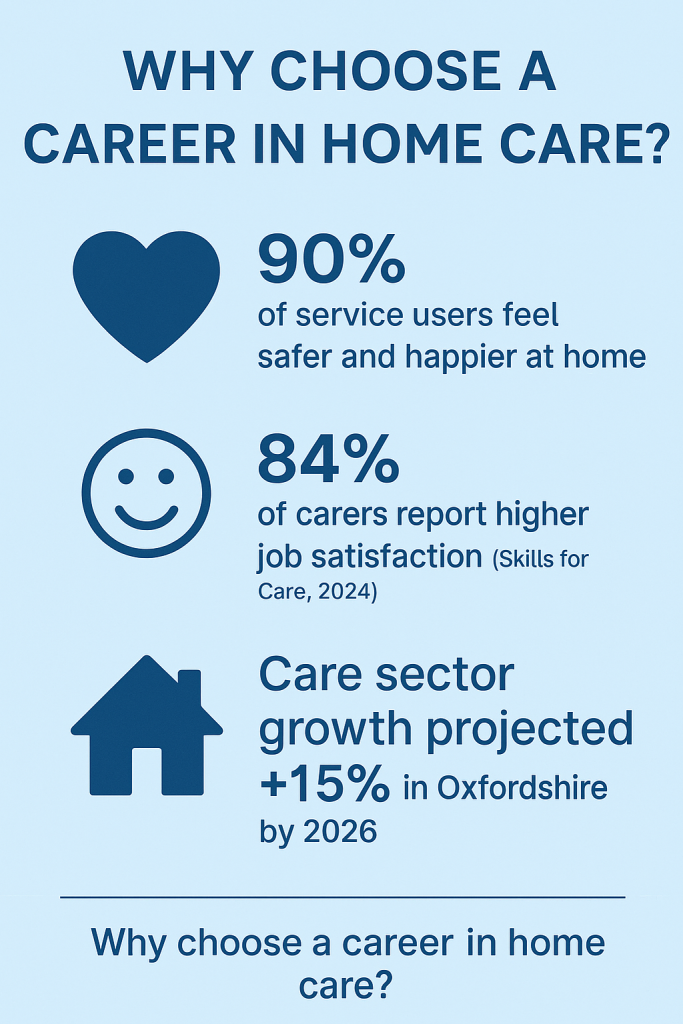
The domiciliary care sector is one of the fastest-growing and most stable industries in the UK. This is driven by our ageing population and the increasing societal recognition of the importance of personalised, home-based support. According to Skills for Care, the demand for compassionate and skilled support workers remains consistently high across England. For 2025 and beyond, this need is only set to grow. This means that not only is there excellent job security when you become a support worker, but a career in home care also offers clear pathways for progression.
You might start as a support worker providing direct care in Abingdon, and with experience and training, you could move into roles like senior support worker, care coordinator, a specialist in areas like dementia care or end-of-life support, or even into training or management positions. Many support workers also pursue formal qualifications (like Diplomas in Health & Social Care), often funded or supported by their employers.
At Care With Dignity Partnerships, we are passionate about helping our staff progress. We offer accredited training and tailored career development programmes, ensuring our team members in Oxfordshire have the tools, skills, and confidence to thrive and advance in their chosen roles.
3. Busting Some Common Myths About Working in Care
Despite all its rewards, some people hesitate to join the care sector because of a few common misconceptions. Let’s clear some of those up:
- Myth: “Anyone can do it.”
- Reality: While you don’t always need formal qualifications to start as a support worker (as good training is provided), the role absolutely demands emotional resilience, excellent communication skills, reliability, patience, and genuine compassion. It’s a role for dedicated, caring individuals, not just anyone.
- Myth: “It’s just about doing physical tasks.”
- Reality: While practical help is part of it, home care work is so much more. It involves providing vital emotional support, building trusting relationships, engaging people in activities they enjoy, and always respecting the dignity and individuality of every person you care for.
- Myth: “The hours are always terrible and unsociable.”
- Reality: While home care does need to cover various times of the day to meet service users’ needs (including some evenings and weekends), many care providers, including Care With Dignity Partnerships, offer a range of flexible working patterns. We have both full-time and part-time roles available in Abingdon, Didcot, and Wantage to suit different lifestyles and commitments.

4. Getting Started as a Support Worker with Care With
Dignity Partnerships in Abingdon, Didcot, or Wantage
If you’re considering switching to a career in home care, or starting your first job in the sector, Care With Dignity Partnerships provides an excellent and supportive starting point right here in your local Oxfordshire community.
We offer our valued team members:
- Comprehensive Training from Day One: Whether you’re brand new to care or have some prior experience, we provide robust induction and ongoing training to equip you with all the skills and confidence you need to succeed and feel good in your role.
- Flexible Roles Tailored to You: Our positions can be flexible. We have part-time roles that might suit students, parents, or semi-retirees, as well as full-time opportunities for those looking to make care their primary career.
- A Genuinely Supportive Team Environment: A strong support network is absolutely key when you’re a support worker. Our local team leaders and colleagues in Abingdon, Didcot, and Wantage ensure you never feel like you’re facing challenges alone. There’s always someone to ask for advice or share experiences with.
- Real Opportunities for Growth & Development: From funded qualifications (like Diplomas in Health and Social Care) to mentoring programmes and chances to specialise, we’ll help you reach your full potential in this growing and rewarding industry.
Ready to take the first step towards a more fulfilling career? Get in touch with Care With Dignity Partnerships today to learn more about current opportunities to join our friendly and professional team.
5. Is This the Right Career Move for You?
While a career as a support worker in home care is incredibly rewarding, it’s important to consider whether it truly aligns with your personal values, strengths, and aspirations. Ask yourself honestly:
- Do I genuinely enjoy working closely with people and helping them?
- Am I a compassionate and empathetic person by nature?
- Can I remain calm and supportive even in emotionally challenging situations?
- Do I truly want to make a meaningful, positive difference in someone’s everyday life?
If you answered a heartfelt “yes” to these questions, then a career in home care could indeed be your calling.
6. The Unmatched Rewards of Caring
Switching to a career in home care is so much more than just a change of job – it’s a chance to live with a real sense of purpose, to build meaningful human relationships, and to contribute positively to your local Abingdon, Didcot, or Wantage community. Whether you’re helping someone regain a little independence after an illness, cheering them up on a lonely day with a cup of tea and a chat, or empowering them to live with dignity and choice in their own home, the rewards of working as a support worker are truly unparalleled.
At Care With Dignity Partnerships, we’re proud to help individuals just like you transition into this incredible and vital field. With our comprehensive training resources, supportive local culture, and unwavering dedication to providing quality, person-centred care, we’re here to make your journey into a career in home care as smooth, successful, and rewarding as possible.
Why wait any longer to find a job you can truly love? Start your rewarding career in home care today and join a growing community of compassionate support workers who are changing lives for the better, one day at a time, right here in Oxfordshire.

📞 Questions about training or roles?
TL;DR:
Thinking of a Career Change in Abingdon, Didcot, or Wantage? Home Care Could Be for You!
Switching to become a support worker (carer) with Care With Dignity Partnerships means:
- Making a Real Difference: You’ll directly help people in Abingdon, Didcot & Wantage live better, more independent lives in their own homes. It feels great!
- Personal Growth: You’ll learn loads about empathy, patience, and resilience.
- Job Security & Progression: Carers are always needed, and there are chances to build a career and get qualifications (we help with that!).
- Myths Busted: It’s not “just anyone” – it takes dedication. It’s more than just tasks – it’s about connection. And yes, we offer flexible hours!
- Great Support: We give full training and have a friendly team in Abingdon (Drayton), Didcot & Wantage to back you up.
Basically: If you’re a caring person wanting a secure, fulfilling job where you genuinely help your local community, becoming a support worker with us is a fantastic choice.