
What Makes a Great Support Worker? Essential Traits and Skills for Providing Care in Abingdon, Didcot & Wantage
Whether it’s supporting an older parent to live independently at home, assisting a loved one managing a long-term condition, or providing professional domiciliary care (care in people’s own homes), support workers (often called carers) are at the very heart of people’s lives and wellbeing. But what truly defines a great support worker? With the rising demand for compassionate, high-quality in-home care across the UK, especially in our local communities of Abingdon, Didcot, Wantage, and the surrounding Oxfordshire villages, identifying the essential traits and skills of an exceptional support worker has never been more important.
📣 Jump to TL;DR
If you’re short on time but want a quick summary of what makes a great support worker, jump to the bottom.
At Care With Dignity Partnerships, based in Abingdon, we believe the key to outstanding care lies deeply in the character and values of the caregiver, complemented by their professional skills and training. In this article, we explore the essential personal traits and professional skills that set exceptional support workers apart – and why these qualities matter so profoundly to the service users (the people they support) and their families in Oxfordshire.
“It’s not just what carers do – it’s how they make people feel: safe, heard, and respected.”

Why Great Support Workers Matter More Than Ever in Our Community
The UK is experiencing a significant demographic shift with an ageing population. According to the Office for National Statistics (ONS), a substantial and growing number of people in the UK are aged 65 and over. As this trend continues into 2025 and beyond, the need for high-quality domiciliary care in areas like Abingdon, Didcot, and Wantage also increases. This highlights the growing importance of dedicated support workers who can uphold not only safety and health standards but also foster compassion, dignity, and independence.
For individuals receiving care in their own homes – whether due to age, disability, illness, or recovery needs – a great support worker can dramatically improve their quality of life. It’s about so much more than just helping with practical tasks like personal care (bathing, dressing), meal preparation, or assisting with medication. It’s about building trust, promoting independence wherever possible, offering companionship, and providing emotional and social support that enhances everyday living and wellbeing.
Essential Personal Traits of a Great Support Worker
“A great support worker brings dignity into the smallest everyday moments. That’s true care.”
While practical skills are fundamental for providing safe and effective care, it’s often the personality and inherent personal attributes that truly define what makes a support worker outstanding. Here’s what we, and the families we serve in Oxfordshire, look for and value most:
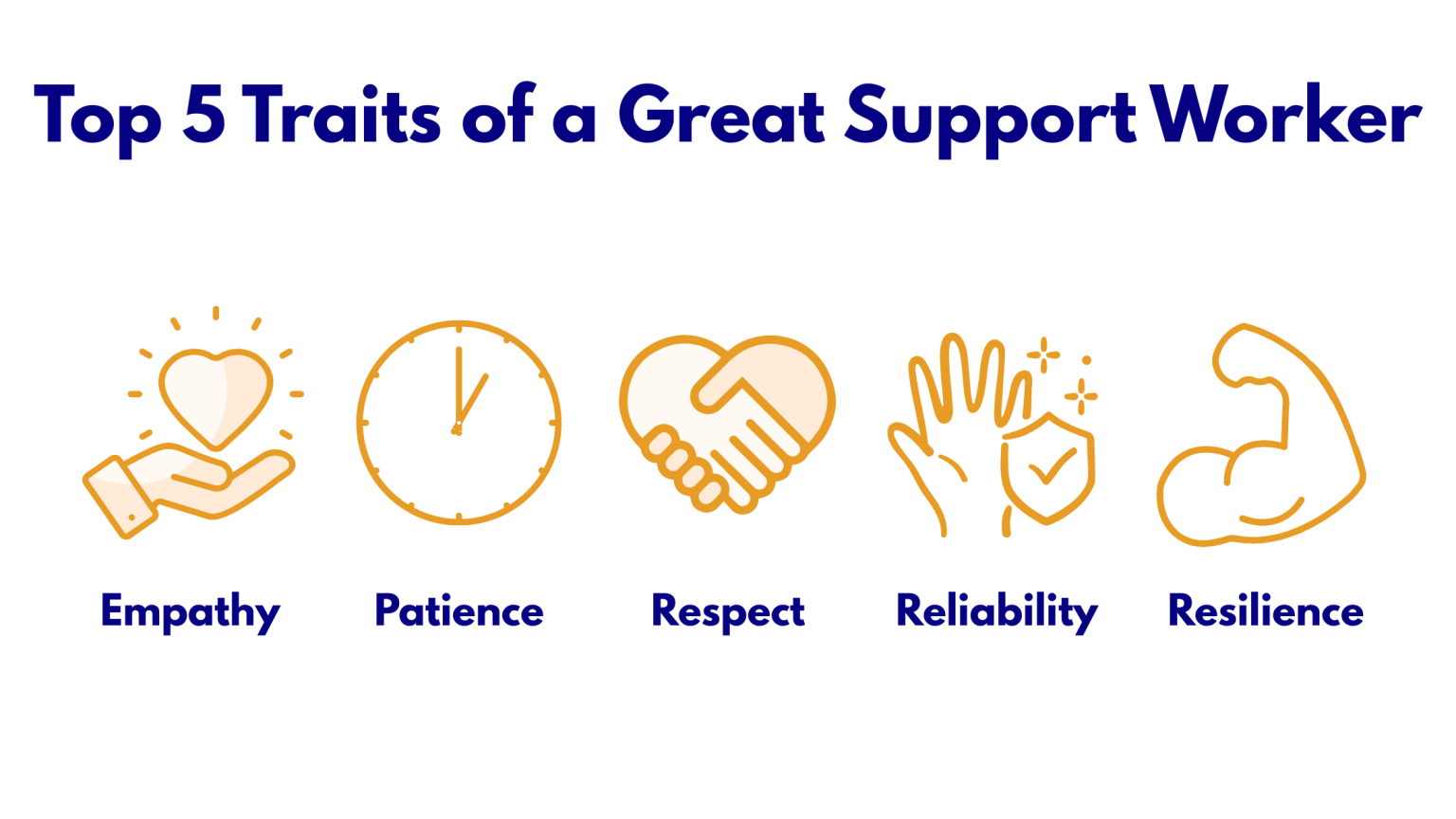
1. Empathy and Genuine Compassion
Understanding and sharing the feelings of others, without judgement or impatience. The best support workers can put themselves in someone else’s shoes and respond to their emotional and practical needs with genuine compassion and understanding. Empathy isn’t just about being kind – it’s about truly trying to understand a service user’s frustrations, fears, joys, and preferences, and responding in a way that makes them feel heard and valued. Families in Abingdon, Didcot, and Wantage especially value this when their loved ones are feeling vulnerable, anxious, or are going through a difficult time. At Care With Dignity Partnerships, we consistently receive feedback about how much our service users appreciate support workers who “really listen,” “understand me,” and “make them feel seen and respected.
2. Patience and Calmness
Patience turns necessary tasks into moments of genuine care. Supporting someone – particularly individuals living with dementia, those with communication difficulties, or people with mobility challenges – often involves taking things slowly, repeating steps or information clearly, or calmly managing moments of frustration or emotional distress. Great support workers are able to remain calm, composed, and patient, giving the service user the time and space they need without rushing. Rushing through routines can undermine the dignity and comfort of the person receiving care; patience protects and promotes that dignity.
3. Respect for Individuality, Choice, and Independence
Good care is not about ‘doing for’; it’s about ‘supporting someone to do for themselves’ as much as possible. This is one of Care With Dignity Partnership’s core beliefs. Every individual we support in Oxfordshire has their own unique personality, preferences, routines, cultural background, and life story. A great support worker respects and adapts to these individual differences rather than trying to enforce a ‘one-size-fits-all’ routine. Enabling service users to make their own choices – even small ones like what to wear, what to eat, or how they’d like a task done – is crucial for maintaining their independence, self-esteem, and sense of control.
4. Reliability, Dependability, and Trustworthiness
Being consistent and dependable builds essential trust. For many people receiving care in their homes in Abingdon, Didcot, or Wantage, their support worker may be one of the most consistent and important human contacts they have. Turning up on time for every scheduled visit, always following through on what you say you’ll do, and keeping personal information confidential are all absolutely critical to building and maintaining trust. Our efficient scheduling system and team of dedicated, local support workers help ensure that our care professionals are punctual, dependable, and provide that consistency our service users rely on.
5. Emotional Resilience and Professionalism
Working in home care comes with its unique challenges – emotional strength and professionalism help navigate these. Whether dealing with a service user’s low mood, supporting someone through a period of ill health, or simply managing the everyday emotional aspects of the role, a strong support worker needs to maintain professional boundaries while offering appropriate emotional support. Those with emotional resilience are able to do this effectively while also looking after their own wellbeing, preventing burnout and ensuring they can continue to provide the best possible care.
Professional Skills Every Great Support Worker Should Master
Aside from strong emotional intelligence and positive personal values, providing excellent domiciliary care requires a solid foundation of core professional skills. At Care With Dignity Partnerships, we provide comprehensive induction and ongoing training in all these essential areas for our Abingdon, Didcot, and Wantage teams:
1. Excellent Communication Skills (Verbal and Non-Verbal)
Clear, kind, and respectful communication is the absolute cornerstone of good quality care. Whether it’s explaining how medication should be taken, actively listening to a service user’s concerns, liaising with family members, or interacting with other healthcare professionals (like GPs or district nurses in Oxfordshire), a great support worker can articulate information clearly – both verbally and in written records. This also includes being skilled in non-verbal communication, such as using appropriate body language, maintaining good eye contact (where culturally appropriate), and using a warm, reassuring tone of voice. These skills are especially vital when working with people who have dementia, hearing impairments, or other communication difficulties.
2. Safe Moving and Handling Techniques
Support workers must know how to assist service users with their mobility safely, without risking injury to either themselves or the person they are supporting. Skills like using hoists or other mobility aids correctly (if required), supporting safe transfers (e.g., from bed to chair), and encouraging mobility in a safe and enabling way are part of our essential training. According to UK Health and Safety Executive (HSE) guidance, improper manual handling is one of the major contributors to injuries in the health and social care sector. Ongoing training and refresher courses significantly reduce these risks and improve outcomes.
3. Medication Administration Support and Awareness
Whether it’s prompting or reminding service users to take their prescribed medicines, or in some cases, administering medication directly (following strict protocols and training), support workers must have a thorough understanding of medication procedures, potential side effects, and accurate recording and reporting requirements. All training must be up-to-date and in line with CQC (Care Quality Commission) and NICE (National Institute for Health and Care Excellence) guidelines.
4. Thorough Infection Prevention and Control Procedures
Maintaining excellent hygiene and rigorously reducing the risk of spreading illness is critical in domiciliary care. Correct usage of Personal Protective Equipment (PPE), a clear understanding of cross-contamination risks, and proper hand hygiene techniques are standard, non-negotiable expectations for any professional support worker.
5. Accurate Care Planning, Record Keeping, and Reporting
Accurate, detailed, timely, and secure record-keeping is essential for ensuring continuity of care, tracking a service user’s wellbeing, and supporting effective collaboration with family members and other healthcare professionals. A great support worker will be diligent in clearly documenting care provided, appointments, any incidents or concerns, medication administration, and any changes observed in a service user’s condition or well-being.
Qualifications That Support Great Care in Oxfordshire
While many of the most important personal traits often can’t be “taught” in a classroom, the essential technical skills of a great support worker certainly can be learned and developed through professional training and experience. In the UK, some relevant qualifications and training benchmarks include:
- The Care Certificate: This is the foundational induction training for new care workers in England. It covers 15 essential standards, including safeguarding, nutrition, dignity, and duty of care.
- Level 2 or 3 Diplomas in Health and Social Care (formerly NVQs): For more experienced support workers, or those looking to progress, these qualifications demonstrate a deeper knowledge and competence in a wide range of care practices.
- First Aid and Basic Life Support Training: Essential skills for responding to emergencies.
At Care With Dignity Partnerships, we not only ensure all our new support workers complete the Care Certificate as part of their induction, but we also actively provide and support opportunities for ongoing training and further professional development. This is especially true for support workers looking to specialise in supporting individuals with specific conditions like Parkinson’s, dementia, or providing palliative (end-of-life) care.
The Local Connection: Why Community-Based Care in Abingdon, Didcot & Wantage Matters
One of the unique strengths of local home care providers like Care With Dignity Partnerships is our deep connection to the community we serve, specifically Abingdon, Didcot, and Wantage.
By recruiting support workers from within these local areas, we ensure our team not only understands the practical logistical needs of service users (like knowing the local GP surgeries, pharmacies, or community centres) but also often shares an understanding of the cultural and social nuances that shape a person’s daily life in their particular town or village. This local connection helps build trust, rapport, and familiarity – three elements that are absolutely crucial in developing positive, long-lasting care relationships.
Why Hiring Great Support Workers Pays Off for Everyone
While it might seem “soft” to focus so heavily on qualities like empathy, patience, and personality, the truth is that excellent support workers deliver tangible, measurable positive outcomes. Families of service users whom we’ve supported in Oxfordshire frequently report:
- Reduced hospital admissions or readmissions due to proactive, observant care and support.
- Improved mental wellbeing and reduced loneliness for service users due to consistent companionship and person-centred engagement.
- Greater ability for family caregivers to continue with their own work, manage other commitments, or simply have some much-needed respite, knowing their loved one is in safe, caring hands.
Investing in great support workers doesn’t only mean better quality of care for service users – it also means greater peace of mind, improved stability, and enhanced independence for individuals and their families across Abingdon, Didcot, and Wantage.
The True Heart of Caring in Oxfordshire
At its very essence, great domiciliary care is built around people – their dignity, their independence, their choices, and their overall wellbeing. While professional skills and formal qualifications form an essential foundation, it’s those vital personal qualities such as genuine compassion, unwavering patience, and profound respect that transform a good support worker into a truly great one.
At Care With Dignity Partnerships, we understand that true care is about partnership – a partnership between the support worker and the service user, between the family and our care team, and between our service and the wider Abingdon, Didcot, and Wantage community. That’s why we invest so heavily in recruiting individuals with the right personal values, and then providing comprehensive training, ongoing wellbeing support, and continued professional development for our dedicated support workers – because when our team members excel and feel valued, our service users flourish.
If you’re looking for dependable, compassionate in-home care for yourself or a loved one in Abingdon, Didcot, Wantage, or the surrounding Oxfordshire area – or if you are a caring individual who feels passionate about making a real difference and are interested in joining our team – we’d love to hear from you.
Explore our care services or learn about current career opportunities by visiting our website or contacting us for a friendly, no-obligation chat.
TL;DR:
What Makes a Great Support Worker in Abingdon, Didcot & Wantage?
Being a great support worker (carer) helping people at home in Abingdon, Didcot, or Wantage is about more than just skills – it’s about who you are.
- Key Personal Traits: You need to be empathetic (understanding), patient, respectful (treating everyone as an individual), reliable, and emotionally strong. Families in Oxfordshire tell us these things make a huge difference.
- Essential Skills (We Train These!): Good communication (listening too!), knowing how to help people move safely, understanding medication support, keeping things clean to stop infections, and good record-keeping.
- Qualifications Matter: The Care Certificate is the starting point for new carers. We also support further learning like Diplomas.
- Local is Best: Being a local support worker in Abingdon, Didcot, or Wantage helps build trust and understanding.
Basically: Great support workers are kind, patient, and respectful people who also have good professional skills (which Care With Dignity Partnerships provides full training for). This means better care for service users and a more rewarding job for you!