
Understanding Care: What is Respite Care?
Caring for a loved one at home is a special role. It can bring joy and closeness, but it can also be tiring and sometimes overwhelming. That’s where
respite care helps.

Respite care means a trained support worker steps in for a short time, so the main carer can rest, recharge, or take care of other things. The service user stays safe, supported, and comfortable at home, while the carer gets a much-needed break.
At
Care With Dignity Partnerships, we provide flexible respite care across Abingdon, Didcot, Wantage, and nearby areas, giving families peace of mind and practical support when they need it most.
“Respite care gives carers the chance to rest and recharge, while ensuring their loved ones remain safe and supported at home.”
What is Respite Care?
Respite care is short-term care that gives family carers time off. It could be:
- A few hours in the day
- An overnight stay
- A weekend break
- Or longer, if needed
Because we deliver respite care at home, service users stay in familiar surroundings, keep their normal routine, and feel more at ease.
Why Respite Care Matters
In the UK, millions of people care for loved ones without pay. Many balance this alongside jobs, children, or their own health needs. Without a break, it’s easy to feel exhausted or burnt out.
Respite care allows carers to:
- Rest and recover
- Go to appointments or run errands
- Spend time with family and friends
- Take a holiday
- Return to caring with more energy and patience
“Without a break, many unpaid carers face exhaustion and burnout — respite care helps prevent this.”
Who Can Benefit from Respite Care at Home?
Respite care is helpful for many service users, including:
- Older adults who need help with daily activities
- People living with dementia or Alzheimer’s
- Those with physical or learning disabilities
- Anyone recovering from illness or surgery
- Families needing palliative (end-of-life) support
At Care With Dignity Partnerships, we
tailor each package to the service user’s needs, routines, and preferences. That way, both families and service users feel supported and confident.
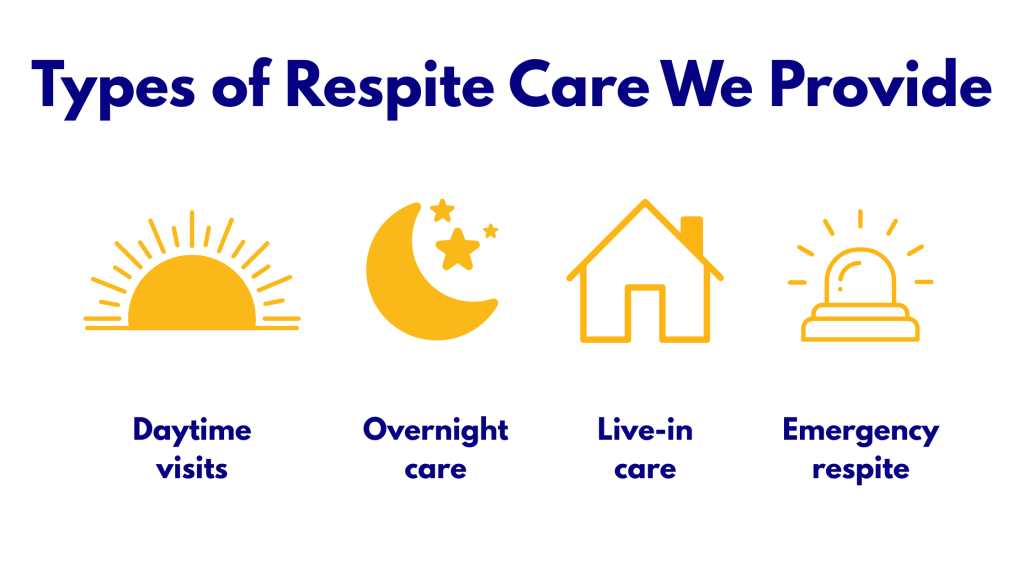
Types of Respite Care We Provide
- Daytime visits – a few hours or a full day, ideal for appointments or a rest
- Overnight care – a support worker stays through the night for peace of mind
- Live-in care – round-the-clock help for longer breaks or more complex needs
- Emergency respite
– fast support if a carer is suddenly unavailable
Why Home-Based Respite is Different
Some families choose care homes for respite, but many prefer home-based care because:
- Service users stay in their own familiar space
- Routines are kept consistent
- Care is one-to-one and fully focused
- Families can stay as involved as they wish
We’ve seen how keeping respite at home reduces stress, especially for people with dementia, and helps everyone feel more settled.
“Familiar surroundings and consistent routines make home-based respite care a more comforting option for families.”
How to Arrange Respite Care with Us
Getting started is simple:
- Contact us – by phone or through our website
- Home visit – we meet the service user and discuss needs
- Care plan – we agree on a plan that works for everyone
- Ongoing support – we keep in touch and adapt care as needed
We also try to match the same support worker for repeat visits, so there’s consistency and trust.
Final Thoughts
Respite care is more than a “break.” It’s an essential way to protect the health of both carers and service users. It makes caring sustainable, reduces stress, and supports independence at home.
At
Care With Dignity Partnerships, we’re here to provide flexible, compassionate respite care across Abingdon, Didcot, Wantage, and surrounding villages. Whether you need help for a few hours, a weekend, or in an emergency, our team is ready to step in.Looking for respite care or interested in joining our team as a support worker? Contact us today.